From Mask to Mirror: How to See Your Identity Without Fear

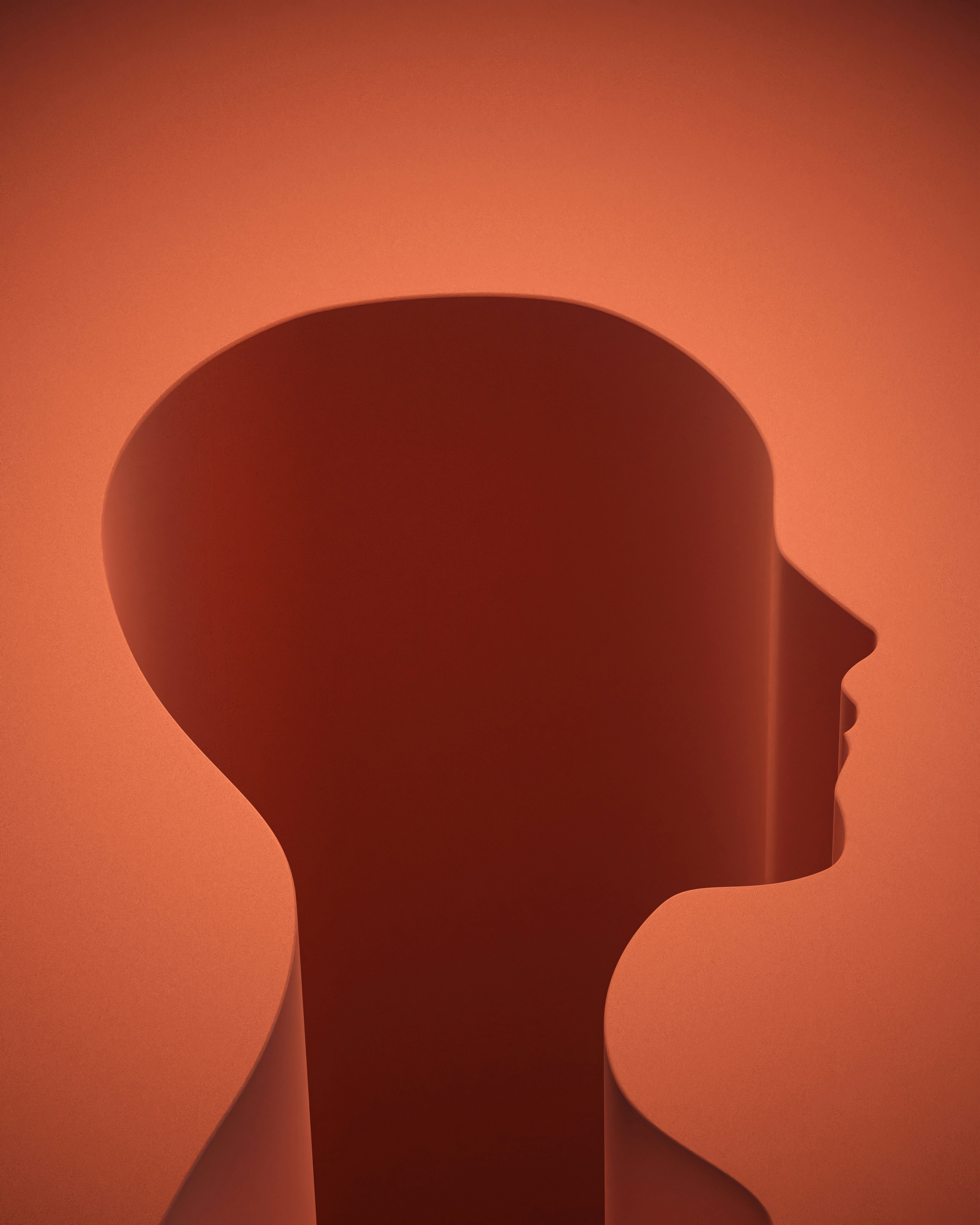
The Mask We Learn to Wear
Every human being wears a mask. Some masks are polished — high-achieving, confident, admired. Others are quiet, agreeable, careful, and accommodating. These masks are not lies; they are survival strategies. They were built to keep us safe, accepted, or invisible in environments where showing the whole self felt dangerous. Carl Jung called this the Persona: the part of us adapted to meet the world’s expectations.
The problem is not the mask itself. The problem is forgetting that it is a mask. Over time, we identify with the adaptation so profoundly that we mistake it for who we truly are. The work of identity is not to rip the mask off in rebellion, but to hold up the mirror — to see the mask for what it is and, behind it, the architecture of the authentic.
Jung’s Persona and Shadow
Jung believed that the Persona is only half the story. The parts of us that do not fit the mask — the messy, the vulnerable, the defiant, the sensitive — are pushed into what he called the Shadow. These parts do not disappear; they live in the unconscious, influencing our behaviour from the dark.
When we fear the mirror, it is often because we fear seeing the shadow — the aspects of ourselves we were taught to reject. However, modern psychology confirms that integration, not suppression, leads to wholeness. Research on self-concept clarity (Campbell et al., 1996) shows that people with fragmented or inconsistent self-views suffer higher anxiety and depression. Hiding parts of ourselves does not protect us; it fractures us.
The Fear of Seeing Clearly
Why does the mirror feel so threatening? Because the survival identity depends on illusion. If your mask is built on achievement, looking in the mirror might reveal exhaustion beneath. If your mask is built on people-pleasing, the mirror might reveal resentment. If your mask is built on toughness, the mirror might reveal sensitivity.
The nervous system resists this not because truth is harmful, but because truth is unfamiliar. Safety has been associated with the mask, not the mirror. This is why so many people cling to loops and patterns — not because they do not want freedom, but because the mirror feels unsafe.
From Mask to Mirror: The Path to Cognitive Identity
The shift comes through gradual, embodied seeing. This is the move from Survival Identity to Cognitive Identity. Survival identity is a mask — the nervous system’s adaptation. Cognitive identity is mirror — awareness of the architecture beneath.
Practices like journaling, mindfulness, and therapy create safe mirrors: spaces where the unconscious becomes visible. Research on expressive writing (Pennebaker, 1997) shows that putting unspoken experiences into words improves both mental and physical health. Similarly, mindfulness-based interventions (Kabat-Zinn, 1990) allow individuals to witness thoughts without judgment, reducing fear of the mirror.
These practices do not strip the mask away violently; they help you hold it gently, realising it was never you. With awareness, you gain choice: you can wear the mask when useful, but you are no longer trapped in it.
Integration, Not Erasure
The goal is not to destroy the mask or banish the shadow, but to integrate them. Jung wrote, “One does not become enlightened by imagining figures of light, but by making the darkness conscious.” Cognitive identity is the ability to live with awareness of all parts — mask, shadow, and essence — without fear. When you see clearly, you stop performing survival and start embodying alignment.
FAQ
Q: What does “mask” mean in psychology?
It refers to Jung’s Persona — the identity we build to adapt to social expectations, often at the cost of authenticity.
Q: What is the “mirror” in this context?
The mirror symbolises awareness: the ability to see the survival mask and the shadow beneath without fear.
Q: Why is it hard to face the mirror?
Because the nervous system equates the mask with safety. Seeing the shadow feels unfamiliar, which is interpreted as unsafe.
Q: How can I move from mask to mirror?
Through practices like journaling, mindfulness, therapy, and self-inquiry — tools that safely reveal hidden parts of the self.
Closing Reflection
The mask protected you. It kept you safe when safety felt scarce. However, you were never meant to live inside it forever. The mirror may feel frightening, but it is also liberating. To see clearly is to realise that identity is not performance but perception. From mask to mirror, you discover that the truth of who you are has been there all along — waiting for you to look without fear.