Why You Don’t Feel Like Yourself Anymore: How Identity Forms Through Survival and Perception

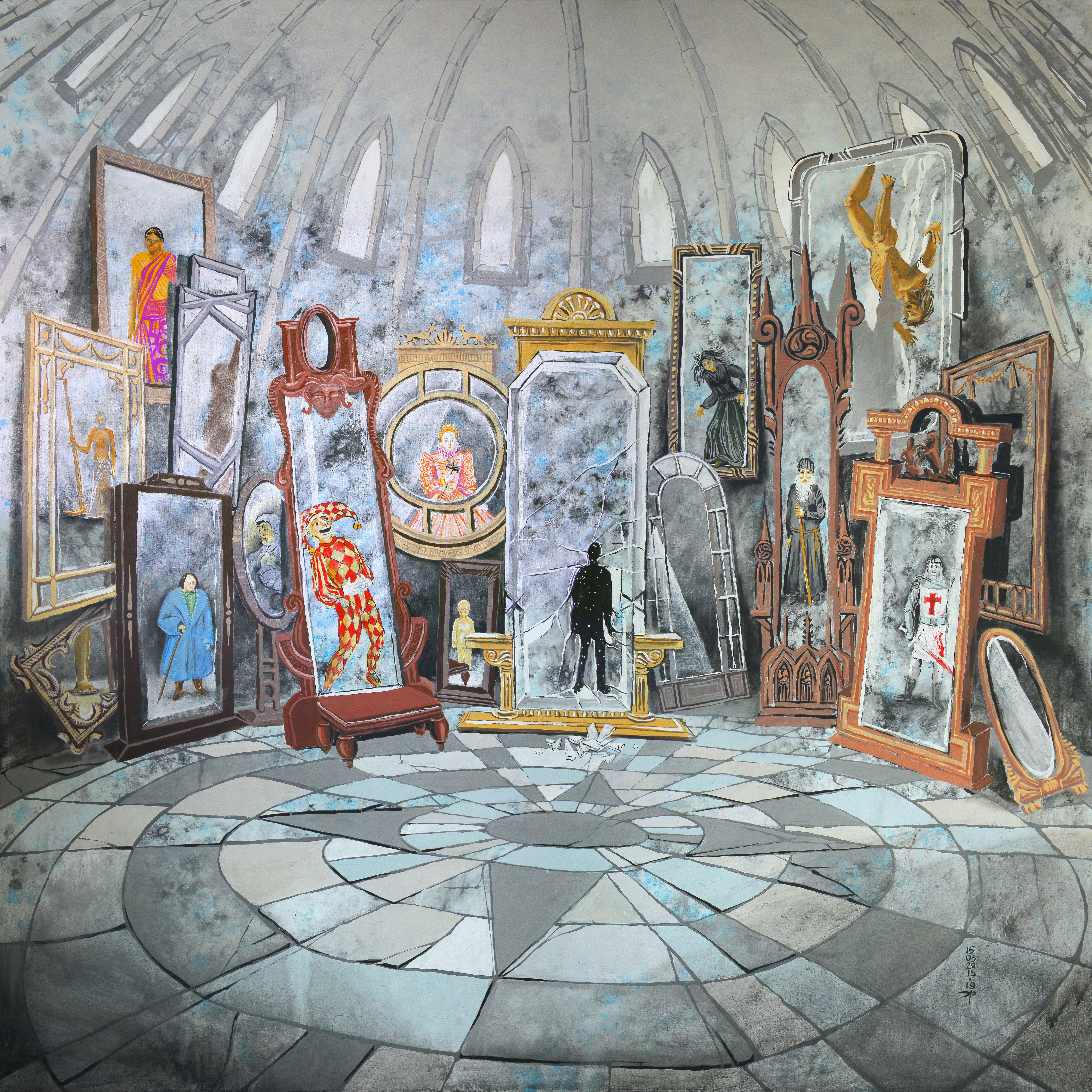
There are periods in life when nothing appears obviously wrong, yet something feels subtly misaligned. You’re still moving through familiar routines, still meeting expectations, still holding the same responsibilities, but your presence within your own life feels thinner than it once did. The sense of continuity that used to hold everything together begins to loosen, and what emerges instead is a quiet, persistent feeling that you’re no longer fully inhabiting who you are.
Many people interpret this experience as confusion, burnout, or a loss of motivation. Others assume it means they’ve failed to stay disciplined or focused. From a psychological perspective, however, this feeling rarely signals personal deficiency. More often, it reflects a moment when the identity that once organised your life no longer fits the complexity of your inner world.
To understand why this happens, it helps to look at how identity forms and why the mind learns to become who it needs to be long before it learns to see clearly.
How Identity Is Formed in the Mind
Identity does not begin as a conscious decision about who to be. It begins as a process of adaptation.
From early childhood, the nervous system is oriented toward maintaining safety and connection. Before reflection is possible, the body is already registering emotional tone, relational patterns, and environmental cues, gradually learning which expressions invite closeness, which behaviours preserve stability, and which responses reduce friction. These impressions do not arrive as ideas. They arrive as felt experiences, shaping perception long before they are named.
Over time, these adaptive responses settle into what I call survival identity.
Survival identity is not a personality trait or a belief system. It is a functional orientation shaped by the nervous system’s need to remain connected and protected within its environment. It develops through repetition, reinforcement, and subtle feedback, organising behaviour around what feels predictable and manageable. Because it forms gradually and operates beneath awareness, it often comes to feels indistinguishable from the self.
The difficulty arises when survival identity becomes the sole lens through which experience is interpreted.
Survival Identity and the Shape of Familiarity
Survival identity is organised around familiarity. It learns which roles feel acceptable, which emotions are easier to contain, and which versions of the self move through the world with the least resistance. These patterns are not chosen deliberately. They emerge through exposure, shaped by family dynamics, cultural expectations, and social reinforcement.
As long as life remains aligned with the conditions that formed these patterns, survival identity functions quietly in the background. Problems tend to surface when life expands beyond those early conditions. New responsibilities, deeper relationships, or moments of internal questioning begin to reveal a tension between the identity that once preserved stability and the awareness now asking for something more honest.
This is often when people begin to feel disconnected from themselves.
What’s important to recognise is that this disconnection does not come from losing identity. It comes from outgrowing a structure that was designed for an earlier stage of life. The nervous system continues to rely on familiar strategies because familiarity feels safe, even when those strategies no longer reflect present reality.
Cognitive Identity and the Capacity to Observe
Alongside survival identity, another layer of self gradually becomes available. I refer to this as cognitive identity.
Cognitive identity is not a replacement for survival identity, nor is it an idealised version of the self. It is the capacity to notice patterns rather than immediately act them out. It allows perception to slow just enough for reflection to enter, creating space between stimulus and response. Through this space, inherited beliefs, emotional reflexes, and behavioural tendencies become visible rather than unquestioned.
When cognitive identity begins to strengthen, people often experience an initial sense of uncertainty. Familiar motivations lose their urgency. Old goals no longer provide the same orientation. The mind starts asking questions it once avoided, not because something has gone wrong, but because awareness has expanded beyond the limits of automatic adaptation.
This stage can feel disorienting precisely because survival identity is no longer running the system uninterrupted, while cognitive identity has not yet fully stabilised as the organising centre.
Why Feeling Lost Often Signals Transition
From the outside, this phase can resemble stagnation or confusion. Internally, it reflects a reorganisation of perception.
Survival identity seeks predictability. Cognitive identity tolerates ambiguity in order to see more clearly. When these two orientations come into tension, the experience is often interpreted as being lost, when in fact it marks a threshold between adaptation and understanding.
The nervous system resists this transition because uncertainty has historically signalled risk. Yet the absence of familiar certainty does not necessarily indicate danger. It often reflects the loosening of an identity structure that has completed its function.
This is why many people report feeling “not like themselves anymore” just before meaningful psychological integration begins. The identity that once made sense has reached the edges of its usefulness, while the identity capable of holding greater complexity is still taking shape.
Identity, Perception, and Meaning
At a deeper level, identity is inseparable from perception. The way the mind organises experience determines not only how life is interpreted, but whether it feels meaningful at all.
Survival identity filters perception through threat, approval, and belonging. Cognitive identity filters perception through awareness, context, and coherence. When perception is dominated by survival, life can feel narrow and repetitive even when circumstances improve. When perception widens, the same external conditions can begin to feel more alive, not because life has changed, but because the lens through which it is seen has shifted.
Meaning does not emerge through accumulation or optimisation. It arises when perception aligns with truth rather than protection alone. When this alignment begins to take place, the question quietly changes from “What’s wrong with me?” to “Which identity has been organising my experience, and does it still fit who I am becoming?”
FAQ: Questions That Often Surface Along the Way
Why do people feel disconnected from themselves later in life?
Disconnection often occurs when survival-based identity patterns continue to operate beyond the conditions that shaped them. As awareness develops, these inherited patterns may no longer reflect lived reality, creating a sense of internal mismatch rather than actual loss.
Is feeling lost the same as having an identity crisis?
Feeling lost is often an early signal of identity reorganisation rather than collapse. It reflects a growing awareness that familiar ways of relating to self and world no longer provide coherence, even if they once did.
Can survival identity ever disappear completely?
Survival identity does not disappear, nor does it need to. It remains a functional layer of the self. Integration occurs when cognitive identity can observe survival patterns without being governed by them.
Why does authenticity sometimes feel destabilising?
Authenticity introduces uncertainty. For a nervous system shaped around predictability and acceptance, unfamiliar expression can be perceived as a risk, even when no immediate threat exists. This response is biological rather than personal.
How can you tell when cognitive identity is developing?
Cognitive identity becomes noticeable when reactions slow slightly, and curiosity replaces reflexive judgment. Patterns are observed rather than immediately enacted, and attention begins to rest more in awareness than in performance.
A Subtle Reorientation
If you no longer feel like yourself, it may be because the identity that once organised your life has begun to loosen. This does not mean identity has been lost. It means perception has shifted enough to see its structure.
Identity is not something you discover by searching outward. It becomes visible when awareness turns inward.
And as perception clarifies, the self reorganises on its own.