Survival Identity vs Cognitive Identity: How to Rebuild the Architecture of Self

The Battle Between Identities
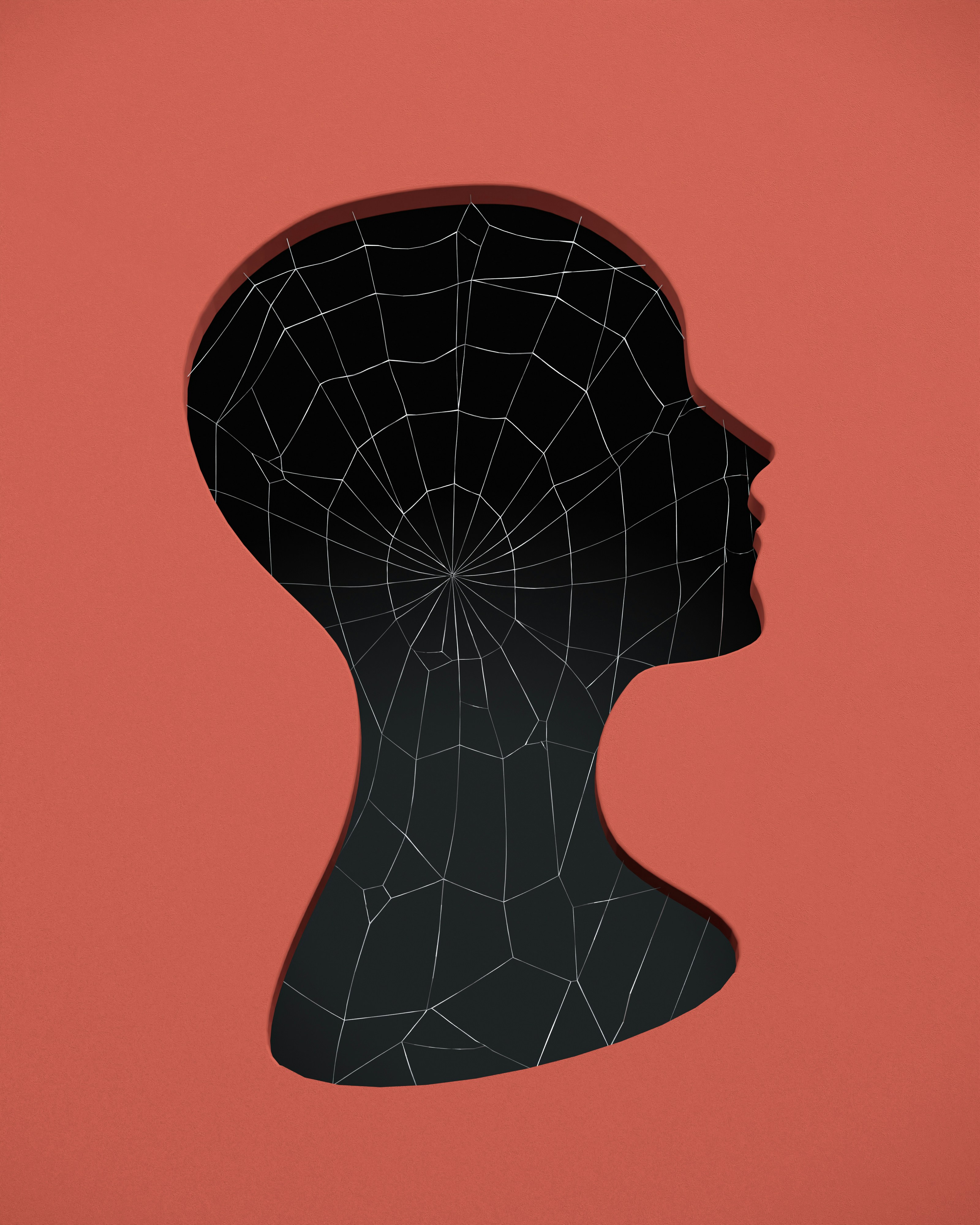
Every human carries two versions of themselves: the self they became to survive, and the self they could be if they rebuilt from awareness. For most, the survival identity runs the show. It feels like personality, but in truth, it’s a set of conditioned responses the nervous system installed to protect us. The tragedy is that this identity keeps people safe at the cost of their freedom.
The opportunity lies in shifting to what I call the Cognitive Identity — an identity that isn’t reactive, but conscious; not shaped by fear, but chosen with clarity.
What Is Survival Identity?
Survival identity is a set of automatic strategies — suppression, control, fawning, perfectionism, hyper-independence — that the nervous system built to keep you safe in unsafe environments. Like Pavlov’s dogs, who learned to salivate at a bell, our nervous system learns to attach specific behaviours to perceived threats.
It’s not who you are. It’s who you had to become.
What Is Cognitive Identity?
Cognitive Identity is different. It is the self that emerges when awareness enters the system. It’s not about discarding your survival strategies, but about reclaiming authorship over them. Research on neuroplasticity (Doidge, 2007; Pascual-Leone, 2005) shows that the brain can rewire itself with intentional practice. Cognitive identity is that rewiring in action — the alignment of nervous system, thought, and choice.
Where survival identity is reactive, cognitive identity is reflective. Where survival identity suppresses, cognitive identity integrates.
The Hidden Cost of Staying in Survival Identity
Behavioural economics teaches us that humans fear losses more than they value gains (Kahneman & Tversky, 1979). This bias is why survival identity holds on so tightly. We cling to the familiar cage rather than risk stepping into the unknown, even when the cage is suffocating us.
Like the famous Asch conformity experiment (1951), people will go along with the group — even when they know it’s wrong — because the nervous system prioritises belonging over truth. Survival identity is this bias at scale: belonging at the cost of selfhood.
How to Rebuild the Architecture of Self
The shift from survival to cognitive identity isn’t about mindset hacks or forcing new habits. It’s about working with the architecture of the nervous system.
Awareness of Loops
Begin by noticing the loops: When do you silence yourself? When do you shrink? Research in cognitive psychology shows that awareness is the first step to interrupting unconscious scripts.Pause and Reframe
John Kabat-Zinn’s mindfulness work (1990) shows the power of the pause. Even a few seconds of awareness creates space for choice. Pair that with reappraisal (Gross & John, 2003), and old patterns begin to lose their grip.Practice Integration
Neuroplasticity research confirms that repetition wires identity. Each time you act from your cognitive identity instead of your survival identity, you’re strengthening the architecture of self.
Survival Identity vs Cognitive Identity: A Comparison
Survival Identity: Reactive, conditioned, fear-driven, exhausting, safety-seeking.
Cognitive Identity: Reflective, conscious, choice-driven, energising, freedom-seeking.
FAQ
Q: How do I know if I’m living in survival identity?
If your daily life feels more about protection than expression, you’re likely in a survival identity.
Q: What is the main difference between survival and cognitive identity?
Survival identity protects. Cognitive identity is created.
Q: Can anyone develop cognitive identity?
Yes. The science of neuroplasticity shows that the brain and nervous system can rewire at any stage of life.
Closing Reflection
The shift from survival identity to cognitive identity is not about becoming someone else — it’s about reclaiming the self you never had permission to be. Survival protected you. Cognitive identity frees you. The work is not to destroy the survival self, but to recognise it for what it is — and then to choose, consciously, what comes next.