How Identity Forms in the Mind (A Psychological View of the Self)

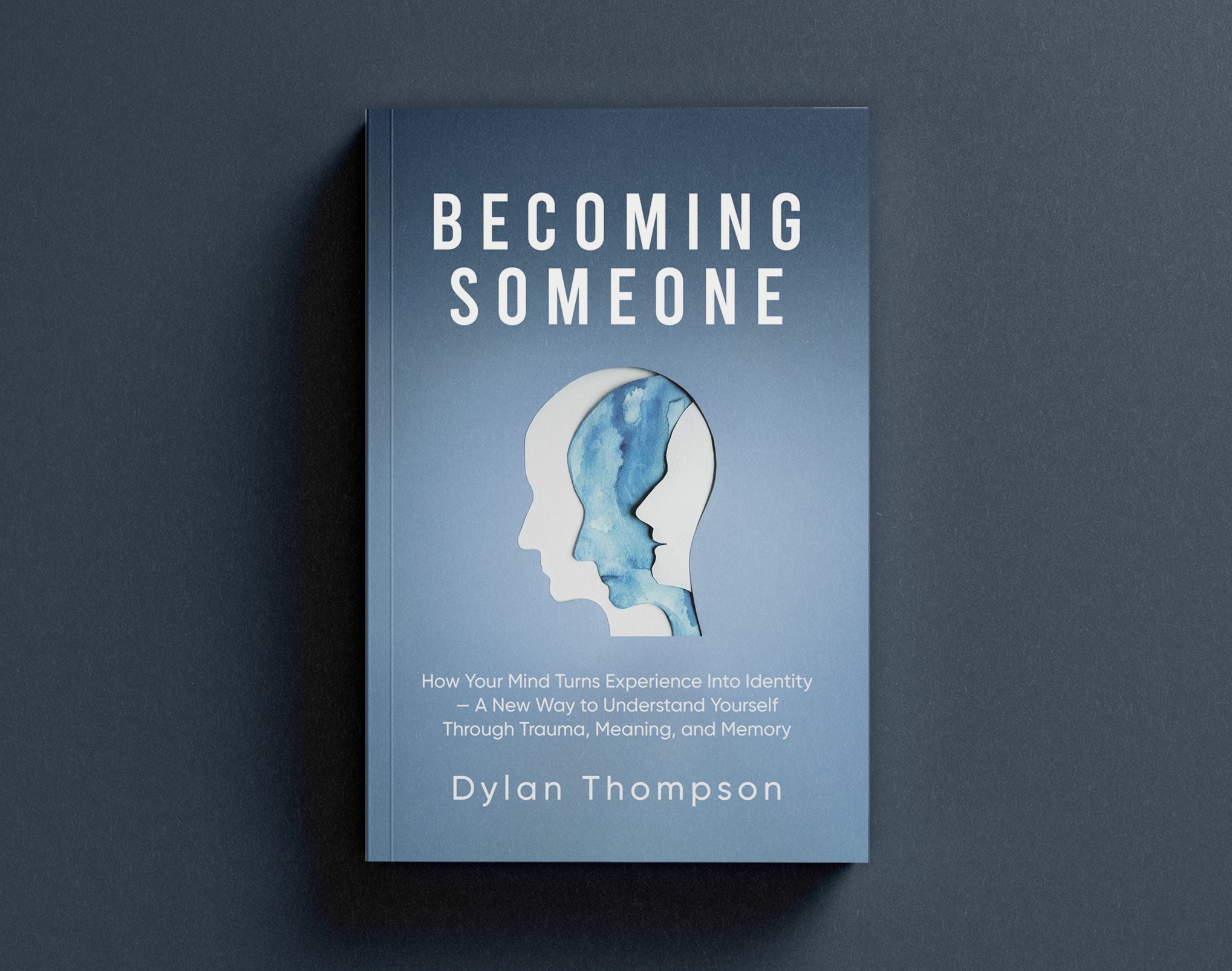
Identity is often described as who someone is. In psychological terms, it functions more as how experience has learned to organise itself. Rather than emerging fully formed, identity develops gradually as the mind adapts to its environment, learning which interpretations preserve coherence and which create disruption.
This process begins early, long before conscious self-reflection is possible. Experience arrives, the nervous system responds, and patterns begin to stabilise. Over time, these patterns shape perception, behaviour, and self-concept, creating a sense of continuity that feels personal even though it was never deliberately chosen.
Identity forms not as a statement of truth, but as a solution to complexity.
The Mind’s Need for Coherence
Psychologically, the mind prioritises coherence. Experience needs to feel connected rather than fragmented, predictable rather than chaotic. Identity provides this connection by linking past experience to present interpretation and future expectation.
Through repetition, certain ways of understanding the world become familiar. Certain responses feel appropriate. Certain explanations feel self-evident. What begins as adaptation slowly takes on the feeling of essence.
The mind does not ask whether these interpretations are accurate in some absolute sense. It asks whether they allow experience to remain navigable.
Identity as an Adaptive Structure
From a psychological perspective, identity is adaptive. It develops in response to relational dynamics, cultural norms, and emotional feedback. The self that emerges reflects what was required to maintain stability within those conditions.
This is why identity can feel stable even when it no longer fits current circumstances. It was designed to solve a problem that may no longer exist, yet the structure remains because it once worked.
When life changes faster than identity can keep up, tension arises. The individual may feel constrained, confused, or disconnected without immediately understanding why.
Why Identity Feels Personal
Identity feels personal because it is formed through lived experience. It carries emotional memory, relational meaning, and interpretive shortcuts that were reinforced over time. These elements are woven together so tightly that separating them feels unnatural.
Psychologically, this sense of ownership is functional. It allows responsibility, agency, and narrative continuity. At the same time, it makes identity difficult to examine. Questioning it can feel like questioning reality itself.
This is not because identity is fragile, but because it has become the lens through which experience is understood.
When Identity Becomes Restrictive
Identity becomes restrictive when it continues to organise experience according to outdated conditions. The mind keeps offering familiar interpretations even as awareness begins registering something different.
At this point, people often describe feeling stuck or lost. Psychologically, what is happening is not a loss of identity but a misalignment between perception and the structure that interprets it.
The discomfort that follows is not pathology. It is information. It signals that identity is being asked to reorganise.
Psychological Growth as Reorganisation
Growth is often framed as the acquisition of new traits or the elimination of old ones. Psychologically, it looks more like reorganisation. Interpretations shift. Patterns loosen. The sense of self becomes less rigid and more responsive to current experience.
This process rarely feels linear. Familiar structures dissolve before new coherence fully forms. During this period, identity can feel unstable, even though it is actively adapting.
Understanding this reframes psychological struggle. What feels like internal conflict often reflects identity adjusting to expanded awareness.
FAQ: Identity Through a Psychological Lens
How does psychology define identity?
Psychology views identity as a structure that organises experience, linking perception, memory, and behaviour into a coherent sense of self.
Why does identity feel so stable?
Because repeated interpretations become familiar, and familiarity creates the impression of permanence.
Can identity change psychologically?
Yes. Identity reorganises as perception updates, especially during periods of transition or reflection.
Why does questioning identity feel uncomfortable?
Because identity provides coherence. Examining it from within can temporarily disrupt that sense of orientation.
Is identity something we choose?
Identity forms largely through adaptation rather than conscious choice, shaped by experience and environment.
Seeing Identity More Clearly
Identity does not need to be fixed to function. It needs to remain responsive. When identity is recognised as an adaptive structure rather than a permanent essence, it becomes easier to relate to change without fear.
The self stops feeling like something that must be defended and starts functioning as a way of organising experience that can evolve as life does.
And once that shift occurs, psychological growth becomes less about self-improvement and more about allowing identity to adjust to what is already being perceived.